
Aperitivo in Italy: More Than a Drink, It’s a Way of Life

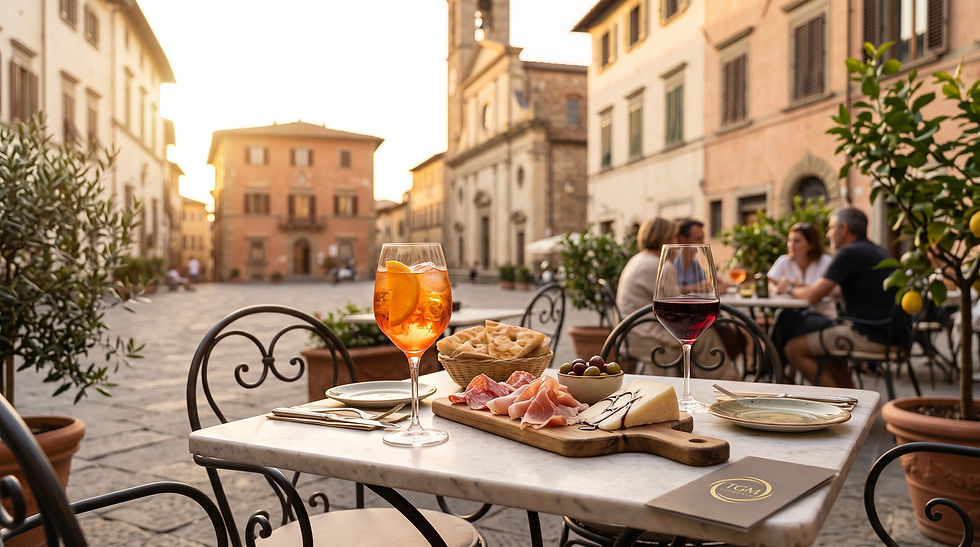
There is a moment in Italy when the pace of the day begins to slow down.
The workday is ending. The streets become livelier. Friends meet at a café, wine bar or piazza, a drink arrives at the table, and a few small bites are shared.
Nobody seems to be in a hurry.
This is aperitivo — one of Italy's most beloved social traditions.
For travelers, experiencing aperitivo in Italy is about much more than ordering an Aperol Spritz. It is a chance to experience everyday Italian life: slowing down, enjoying good food and drinks, connecting with others and making time for the simple pleasures of the evening.
But what exactly is aperitivo? Where did it begin? What do Italians drink and eat? And where should you experience it during your trip to Italy?
Let's take a closer look at one of Italy's most enjoyable traditions.
What Is Aperitivo in Italy?
The word aperitivo comes from the Latin aperire, meaning “to open,” referring to the idea of opening or stimulating the appetite before dinner.
Traditionally, aperitivo is a pre-dinner drink accompanied by small savory bites. Today, however, it has become much more than that.
Aperitivo is a social ritual.
Depending on where you are in Italy, you might enjoy a glass of wine, vermouth, Prosecco, Spritz or Negroni alongside olives, focaccia, cheeses, cured meats, seafood or other local specialties.
But the food and drink are only part of the experience.
Aperitivo is about meeting friends after work, catching up over a drink, watching a city come alive and enjoying the transition between day and evening.
In other words, aperitivo isn't simply something Italians drink. It's a moment Italians make time for.
Where Did Aperitivo Begin?
The history of aperitivo is older and more complex than a single date or place, but modern Italian aperitivo culture is strongly associated with Turin and the development of vermouth in Piedmont.
In 1786, Antonio Benedetto Carpano introduced his vermouth in Turin. The city already had a tradition of herbal wines and spirits, and vermouth soon became closely connected with Turin's café culture and social life.
Other historic producers, including Cinzano and Martini, helped establish Piedmont as an important center of Italian vermouth production.
From Turin, aperitivo culture spread throughout Italy, with different cities and regions developing their own interpretations.
And that is part of what makes aperitivo so fascinating:
There isn't one Italian aperitivo.
The drinks, food and atmosphere change from region to region, but the underlying idea remains the same — gather, slow down and enjoy the beginning of the evening.
Turin: Aperitivo at Its Roots
If you want to discover the historical roots of Italian aperitivo, Turin is an essential stop.
The city's elegant historic cafés provide a beautiful setting for experiencing the connection between vermouth, cocktails and Italian social culture.
Order a traditional vermouth, perhaps served chilled or over ice, and pair it with a few local specialties.
For travelers interested in food, wine and Italian history, Turin offers a particularly authentic introduction to the tradition.
Milan: Where Aperitivo Became an Art
If Turin helped establish the tradition, Milan transformed aperitivo into a defining part of city life.
Today, Milan is one of the best places in Italy to experience contemporary aperitivo culture.
From Brera and Navigli to Porta Venezia and Isola, bars and cafés fill with locals and visitors in the early evening.
Historic venues such as Camparino in Galleria, which opened in 1915, are part of Milan's long aperitivo tradition.
For a more atmospheric experience, head toward the Navigli canals, where outdoor terraces and waterfront bars create one of Milan's most recognizable evening scenes.
And if you're visiting Milan for an AC Milan match at San Siro, aperitivo can be the perfect way to begin or end your match-day experience.
Aperitivo Across Italy
Although Turin and Milan are particularly associated with aperitivo, the tradition can be found throughout Italy — and each region gives it its own personality.
In Veneto, aperitivo is often associated with cicchetti, small Venetian bites traditionally enjoyed with wine or other drinks in local bacari.
In Emilia-Romagna, where food is at the heart of regional culture, aperitivo may feature local specialties such as Parmigiano Reggiano, mortadella, cured meats and regional wines.
In Tuscany, a glass of local wine might be accompanied by crostini, cheeses and cured meats.
Further south, Puglia, Campania, Calabria, Sicily and Sardinia bring a distinctly Mediterranean character to aperitivo, with local wines, olives, seafood, cheeses and regional specialties.
From Liguria to Piedmont, Lombardy to Veneto, Emilia-Romagna to Lazio, Umbria to the Marche, Abruzzo to Puglia, and Sicily to Sardinia, aperitivo reflects the incredible regional diversity of Italian food and culture.
The setting changes. The ingredients change. The drinks change.
But the spirit remains the same.
Come together. Slow down. Enjoy the moment.
What Do Italians Drink at Aperitivo?
There is no single drink that defines an Italian aperitivo.
Some of the most popular choices include:
Aperol Spritz
Light, sparkling and bittersweet, the Aperol Spritz has become one of Italy's most recognizable aperitivo drinks.
Campari Spritz
A more bitter and intensely flavored alternative for those who prefer a stronger aperitivo profile.
Negroni
Made with gin, Campari and sweet vermouth, the Negroni is one of Italy's most famous classic cocktails.
Negroni Sbagliato
A Milanese variation that replaces gin with sparkling wine, creating a lighter cocktail.
Vermouth
Particularly important in Turin and Piedmont, vermouth is deeply connected to the history of Italian aperitivo.
Italian Wine
A glass of regional wine can be just as appropriate — from Prosecco and Franciacorta in the north to wines from Tuscany, Puglia, Sicily and beyond.
And aperitivo doesn't have to include alcohol. Many Italian bars now offer sophisticated non-alcoholic options as well.
What Food Is Served at Aperitivo?
The food served with aperitivo varies enormously depending on the region and the venue.
You might find:
Olives
Potato chips
Focaccia
Grissini
Local cheeses
Cured meats
Crostini
Seafood
Marinated vegetables
Regional specialties
In Venice, you might enjoy cicchetti. In Emilia-Romagna, local cured meats and cheeses may take center stage. In southern Italy, you might find olives, focaccia, seafood and other Mediterranean-inspired bites.
The beauty of Italian aperitivo is that the food often tells you something about where you are.
Aperitivo vs. Apericena: What's the Difference?
If you're traveling in Italy, you may also hear the term apericena.
The word combines aperitivo and cena, the Italian word for dinner.
An apericena is essentially a more substantial aperitivo where the food can be generous enough to replace a full dinner.
The simplest way to think about it is:
Aperitivo: a drink and small bites before dinner.
Apericena: a more substantial food-and-drink experience that can become dinner.
If you're looking for the traditional pre-dinner experience, aperitivo is what you're after. If you're hungry and want something more substantial, ask whether the venue offers an apericena.
When Is Aperitivo in Italy?
Aperitivo generally takes place in the late afternoon and early evening, often beginning around 6 p.m.
The exact timing varies depending on the city, season and venue.
In summer, aperitivo can be especially magical. Outdoor terraces and piazzas fill with people as the sun begins to set, creating the perfect transition from sightseeing to dinner.
And that's another reason aperitivo works so beautifully for travelers.
It gives you permission to slow down.
You don't have to rush from one attraction to the next.
You can simply sit, order a drink and enjoy where you are.
How to Enjoy Aperitivo Like a Local
Aperitivo is relaxed and informal, but a few simple tips can make the experience even better.
Don't rush. Aperitivo is meant to be enjoyed slowly.
Ask what comes with your drink. Some bars offer complimentary snacks, while others charge for a more substantial selection.
Try something local. A regional wine, vermouth or traditional cocktail can make the experience more memorable.
Don't worry about ordering the “right” drink. There is no single correct aperitivo.
Enjoy the atmosphere. One of the pleasures of aperitivo is watching Italian life unfold around you.
Most importantly, don't treat aperitivo as another item to check off your itinerary.
Give yourself time to enjoy it.
Why Aperitivo Is One of the Best Ways to Experience Italy
Italy is famous for its extraordinary monuments, museums, landscapes and cuisine.
But some of the most memorable moments happen between the major sights.
Aperitivo is one of them.
It offers travelers a glimpse into everyday Italian life — the conversations, the flavors, the traditions and the simple pleasure of being together at the end of the day.
And perhaps that is why aperitivo has endured.
It isn't really about the drink.
It's about the pause.
The people.
The food.
The atmosphere.
The moment.
Experience Italy Beyond the Ordinary
At TGM Compass, we believe the best Italian journeys aren't built around simply checking destinations off a list. They're built around experiences that allow you to connect with the places you visit.
That might mean sipping vermouth in Turin, enjoying aperitivo along Milan's Navigli, tasting cicchetti in Venice or watching the sunset over Puglia with a glass of local wine.
Because sometimes, experiencing Italy authentically means doing something wonderfully simple:
Sit down. Order a drink. Taste something local. Take your time.
That's aperitivo.
And that's Italy.
TGM Compass creates personalized Italian journeys built around your interests — from food & wine and culture to sports, wellness, active travel, honeymoons and unforgettable experiences.
Your Italy. Your passions. Your journey.


Comments